Friday, March 17, 2017

Resin Seeping From Sides of Finished Logs


Resin or pitch can seep from logs for years after the logs have been cut and the building finished. This usually happens while moisture is leaving the wood, carrying pitch to the surface. Also, the logs could have been summer cut when they contained more moisture, sap, and pitch. It is always best to cut logs during the winter months or early spring when moisture, sap, and pitch are at a minimum.

Treatment: If the sap or pitch is dry and crystallized it can be scraped off with a metal putty knife or sanded off with an Osborn buffing brush; the remaining residue can be cleaned up with a mild solvent such as rubbing alcohol. If the sap or pitch is still wet, wait until it has stopped running. A cleaning agent like X-180 can be used to remove the wet sap, or let it dry and then clean up with a mild solvent like rubbing alcohol. If you clean it off while it is still wet, it will probably continue to ooze back out over the area you have cleaned. You may want to just let the pitch continue to seep out until it stops before trying to clean it up.

Reprinted from our Log Core newsletter Fall 2016 edition

Questions? Give us a call at 1-800-359-6614 or contact us via our webpage here.

Green Logs, Green Homes

Happy Saint Patrick's Day! It's a good time to remember that unless you specifically stained them to be that color... green logs aren't lucky!

What are green logs?

One way to define green logs is logs that are still wet from being recently cut and have a moisture content of over 18%. In new construction, green logs should be given appropriate settling consideration, such as space above the windows (a common rule of thumb is 1/2" for every foot of log wall). Green wood with moisture content over 18% should also be allowed to dry before applying a final stain/sealer finish. If the wood is too wet, not only could it potentially degrade the penetration and/or adhesion of the coating, but a finish applied to wet wood could also trap moisture behind it and lead to mildew growth or even decay.

Although not common to log homes, green logs could also be defined as green-treated wood, which is wood pressure-treated with a copper preservative that gives a greenish hue. Logs are more typically treated with a borate preservative, but green-treated wood might be seen in deck boards, railings, steps, or other additional features on a log or cedar home. Brand-new green-treated wood can be so saturated with the preservative that any wood stain may have trouble penetrating and/or adhering to it. For this reason, a general rule of thumb would be to let green-treated wood season for at least six months before applying any stain/sealer.

Green logs might also be defined as wet logs with moss or algae growth on them. This is a sign of big trouble and too much prolonged moisture. Whether it is a log at ground level getting too much rain splashback, or a north-facing wall with a leaky gutter, a green log is not a good sign and should be taken care of immediately. Cleaning, preserving, restoring, or possibly partially replacing, are all steps that might be taken after fixing the issue of water exposure.

And yet, while a green log isn't necessarily good, all log homes are green and that's great! In this respect, green means environmentally friendly. Logs are a completely renewable and often locally resourced building material. Even as they grow as trees, logs have taken carbon-dioxide out of the air through the process of photosynthesis. The waste product from building is completely biodegradable. Logs have thermal mass that absorb, retain, and radiate heat back into a home. So while logs may require some attention to resist the natural process of nature, there is no doubt that log homes are green in a good and environmentally friendly kind of way!

Questions on how to keep your log home 'green' in a good way while preventing your logs from going green in a bad way? Give us a call! 1-800-359-6614 or online through our website here.


Thursday, March 16, 2017

Why Do We Need Sapstain Control?

By Gary Schroeder (revised and reprinted from our Spring 1999 issue of Log Core newsletter)

Wood, and in this case the log, was a living substance; as soon as the tree is cut the biological breakdown of wood begins. The wood is protected for some time by first the bark and in the cold months of the year, temperature. As soon as the bark (shell) is removed, fungi can land on the unprotected wood and start its work. The steps of rot are mold and mildew, sapstain, white stringy rot, brown cubical rot and then just organic powder. The mold and mildew attack the surface to break the shell, then the sapstain goes into the wood deeper to start the transportation of water down into the wood to help decay. Next comes the white stringy rot with white filaments coming to the surface to seek out water and bring it deeper into the wood. Then the rotting fungi starts to basically unglue the individual wood cells to bring it back to powder.
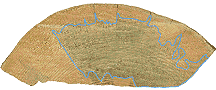
A sapstain control was used to stop sapstain If we can slow down the breakdown of the shell, then we can prolong the breakdown of the internal wood fibers. Through spraying on a diluted preservative, we can accomplish this task. Now not all woods deteriorate at the same rate, for the white oaks, cedar, redwood and many others have toxins within the wood cells to help retard the rotting process. However, the pines which are softwoods have a tendency to rot more quickly. Pine wood also has less density because the cells contain more air that permits quicker entry of the fungi. Enough of why, and on to what deterrents we can apply to the surface to retard the fungi.

We have several products out of a multitude of products on the market. The products we choose to carry are Sansin Timber-Tec, TM-5 First Treat, Sta-Brite P, and PQ-80. We carry these because they are more environmentally friendly than others. However, do not be fooled with the word “friendly”. Any material in stronger concentrates can still be unfriendly.

Sansin Timber-Tec is diluted 1:1 with water. Two options are available: M-30 provides the natural light color of fresh pine and C-20 provides a light honey color to the wood once dried. Its water repellency and UV protection helps during the construction phase

TM-5 First Treat can be diluted 1:1 with water, and in some rare occurrences can be diluted 2:1 if dry weather is expected or if applied to woods that do not sapstain easily. The ingredients in TM-5FT deter rot, sapstain, mildew and mold. However, because it is working within the wood and at times on the surface, it may not stop natural graying and mildew. If reapplied as the previous applications weathers off, it will repel mildew better.

Sta Brite P & PQ-80 are both super concentrated and can only be shipped from the manufacturer or picked up at our Grand Rapids, MN office. Stay Brite P mixes at the rate of 2.56 oz. per gallon or 12.8 oz. per 5-gallons of water, or as the contractor wants to mix it. This product is highly effective and has a bleaching agent in it that will lighten the logs. PQ-80 is similar to the Sta Brite P but contains Copper 8 quinolinolate that is safe for use on food boxes. This product leaves a brownish pigment to the wood. Note: These products are only sold to builders.

To Remember: Fungi need moisture to live. Because moisture is such an important factor to sapstain and rotting, we are mainly concerned about these during the time the wood is cut and to the point that it reaches 20% moisture content. Dry wood does not need protection of this type. Dry wood only requires a finish to keep it dry.

The other thing to remember concerning spraying on mildewcides and finishes is that it causes a film barrier to prevent other liquids from entering the wood. Because of this barrier, it is a requirement to break this barrier down at a later date by pressure washing to allow other products to enter the wood. Some people may wish to apply a borate product like PeneTreat before spraying on the sapstain control. This is permissible. There are different mixing application rates for PeneTreat and the sapstain controls. Because of these different mixing and application rates, it is best to spray them independently. This can be done in either of two methods. First, spray on before sapstain control or Second, pressure wash surface after the house is up and then apply the PeneTreat. This application is recommended so that the most amount of PeneTreat is absorbed into the logs prior to applying the finish.

Questions? Give us a call at 1-800-359-6614 or contact us here.

Friday, February 24, 2017

2017 Catalogs- Hot off the press!

We print them once a year, and they are here! If you are on our list, you should be seeing our new 2017 catalog in the mail shortly.

Our annual catalog is packed full of tips and information on log home care, including our full line-up of products to build, maintain, or restore a log home: stains, finishes, caulk, chinking, backer rod, log tools, preservatives, tenon cutters, books, videos, and more.

If you haven't received one and would like to, the catalogs are free! Request yours here.

Log Help Posts are Moving

 This site will no longer be updated, but please visit www.loghelp.com and especially the FAQs tab for regularly updated content and relevan...