From LogCabinHub.com:
Earlier in the month we announced our “Answers from the Experts” series. In part two of the series we have interviewed John Schroeder from log help, a log cabin expert, on some of your most popular questions on maintaining, protecting and looking after your log cabin home.
For those of you who own a log home, this post will help you with key maintenance elements of maintaining/restoring chinking, staining your cabin and protecting against mildew, mold, termites and rot.
A full transcript of our interview with John can be seen below:
Answers From The Experts: Q&A With A Log Cabin Maintenance Expert
Friday, June 17, 2016


Friday, May 6, 2016
Check out the Largest Log Home in the World

When most people envision log homes, they think of humble
abodes hidden in the woods rather than huge sprawling estates. For the
ultra-rich business magnates of the early 20th century, however, big was the
only way to go. That’s why Louis G. Kaufman, bank president and early member of
the General Motors board of directors, built a massive 266,000-square-foot log
mansion on the shores of Lake Superior in 1923. He called it Granot Loma – an amalgamation of the
names of his wife and three children – and today the estate still holds the
record as the largest log home in the world.
Valued at $40 million, Granot Loma is also the most
expensive home in the state of Michigan. It was constructed between 1919 and
1923 for a total cost of about $5 million – roughly $70 million in today’s
dollars. Kaufman recruited 22 architects and over 400 Scandinavian craftsmen
for the project. Logs for the home were transported from Oregon by rail.
The home features 23 bedrooms, 13 baths and 26 fireplaces.
The fireplace in the great room measure 30 feet long, and its mantel is made of
a beam salvaged from a shipwreck in Lake Superior. Other furnishings in the
house include a chandelier made from the roots of a white pine tree and a Brunswick
Pool table from 1900 inlaid with silver and mother of pearl.
The house is built on a plot of land measuring nearly eight
square miles along with 13 other outbuildings including a dairy barn, pool
house and multiple garages. Today, the enormous residence is listed on the
National Registrar of Historic Places.
Monday, May 2, 2016
Environmentalists Embrace Log Home Construction
The
mention of log homes immediately brings to mind many thoughts, like warm, cozy,
historic, quality craftsmanship, timeless design and durability. Log homes can
also be environmentally friendly as well, as attested to by a growing number of
environmentalists who embrace log home construction. After all, log homes are
one of the oldest forms of building, and have been trusted by homeowners for
centuries.
 Houses
cannot be built from nothing, but they can be built with sustainable practices
from renewable resources like sustainably harvested logs – a completely
renewable resource. Some log home builders even intentionally source
sustainably harvested logs for the homes that they build, and some especially
environmentally conscious homeowners are able to have their log home
constructed wholly or partly with logs that were harvested from their property.
Houses
cannot be built from nothing, but they can be built with sustainable practices
from renewable resources like sustainably harvested logs – a completely
renewable resource. Some log home builders even intentionally source
sustainably harvested logs for the homes that they build, and some especially
environmentally conscious homeowners are able to have their log home
constructed wholly or partly with logs that were harvested from their property.
Aesthetic
considerations are also important in a home, and log homes often look
particularly nice in rural, wooded areas. In the same way that adobe homes look
perfectly natural in the desert, log homes blend in with the environment in a
wooded setting and look as though they are part of the landscape.
Well-built
log homes are also extremely energy efficient due to the thermal mass of the
logs. The thickness of the walls in a log home makes the building easier to
heat and cool than many other types of construction, and this thermal
efficiency, in turn, reduces the need for energy consumption in all seasons.
When combined with eco-friendly energy options like solar, wind or geothermal,
log homes can even be nearly entirely self-sufficient in some instances.
Maintenance
of a log home is similar to any wood building, with occasional resealing needed
based on the weather. Plus, a quality log home will last for many decades,
resulting in a lower environmental impact throughout its lifespan and an
improved durability that makes them one of the most sustainable buildling options.
Schroeder
Log Home Supply has been meeting the needs of customers in the log home
industry since 1986. We offer guides, sealant, tools, fasteners and nearly
everything you need to build, maintain and repair your log home. Shop our full
product selection online now or call us today at 800-359-6614 to learn more.
Tuesday, April 12, 2016
A Spring Cleaning Checklist for Your Log Home

Now that the cold days of winter are finally starting to
recede, you’re probably pretty eager to get outside and catch up on some work
around the house. Why not start by treating your home to a little spring
cleaning? Log home construction is remarkably durable, but a few months of
harsh winter weather can still take a toll. Fortunately, a little seasonal
cleaning can go a long way toward preserving your log home for the future.
Exterior Wash
There are a number of cleaning products
available to help you remove all manner of grit and grime from your home’s
exterior. They can also curb the growth
of mold and mildew which are of particular concern after wet winters. These
products can be applied with a garden hose, so you won’t have to run out and
buy a pressure washer.
Inspect for Rot
As you wash your home, keep an eye out for any logs with rot
and decay. If you notice any significant rot, you may have to call in the
professionals to have it repaired or replaced. Whatever you do, don’t just ignore it. If you’re not sure
how to remedy the problem, seek a professional consultation to determine the
best course of action.
Apply Finish
Consider resealing your log home every few years. This will help to protect it from a number
of environmental threats such as water intrusions and insect invasions. You can
test the water-resistance of your log home with a spray bottle. Simply spray a
section of wood and watch to see if the water beads on the surface or soaks
into the wood. If it doesn’t bead, it’s time to reseal.
Clear Gutters
This is an essential maintenance item in any home, but it’s
especially important in log homes. Clogged gutters and downspouts can cause
rain water to run straight down your home’s exterior, increasing the risk of
mold and mildew growth. Prolonged exposure to rainfall can also lead to rot if
your home isn’t properly sealed. Keeping your gutters clear will ensure that
rain water is deposited safely away from your home.
Friday, March 25, 2016
The Difference Between Chinking and Caulking
All log homes need sealant to close the gaps between log
courses. Because even machine milled logs won’t lie perfectly flush against one
another, these sealants are necessary to prevent water intrusion and provide
insulation. These sealants typically fall into one of two categories – chinking
and caulking. Today we’ll compare the applications for both of these sealant
types.
Chinking

This is the type of sealant that has been traditionally used
in log homes for centuries. It forms the characteristic white bands between the
courses in older log homes. Whereas chinking was originally a Portland cement-based
mortar, today it is an acrylic compound designed for extra elasticity and
adhesion. Before chinking can be applied, a backer rod must be placed in the space
between the log courses. This ensures a firm seal between the joints. Next,
Chinking is applied over the backer rod, filling in the remaining gaps between
the logs. The width of the chinking in a given log home will depend on its
construction and the aesthetic preferences of the owners.
Caulking
This type of sealant is only used in modern, machine-milled
log homes. It’s very similar to the caulk you’ve probably used in your bathroom
or kitchen. Whereas chinking is designed to fill broad gaps between courses,
caulk is used to seal narrow gaps. Likewise, it doesn’t require backer rods.
The caulking in a machine-milled home is more or less invisible from a
distance. Caulk is also more elastic than chinking.
Whatever type of sealant you need for your, Schroeder Log
Home Supply, Inc. can help. Browse our inventory online, or give us a call
today for more information!
Monday, March 21, 2016
Choosing a Tenon Cutter
-Scope
The first consideration is the scope of work or project. If
there is a plan to make log railings or furniture as a business venture, then
purchasing a higher quality but more expensive tool may be the right choice. If
this is just a weekend project at home and the tool may seldom be used again, then
a minimal investment would be preferable.
Weekend
project:
Lumberjack Home Series, Lumberjack Commercial Series, or E-Z Tenon
Cutter
Mid-range
value:
Lumberjack Industrial Series or Lumberjack Pro-Series
In it for the long haul:
Northwest Manufacturing Tenon Cutter
-Style
The profile style a tenon cutter leaves on the wood stock can
vary by brand and series. Some people prefer to see the two logs butt directly
against one another, while others prefer to see the taper from the full stock
down to the tenon peg inserted into the other log.
90º:
E-Z Tenon Cutter 90
60º:
Lumberjack Commercial Series, Lumberjack Industrial Series
45º:
E-Z Tenon Cutter 45
Radius/Radius Shoulder: Lumberjack Home Series, Lumberjack Pro-Series
 |
| 90-degree shoulder (E-Z 90 shown) |
 |
| 60-degree taper (Industrial Series shown) |
 |
| Radius Shoulder (Home Series shown) |
-Size
The size of the wood stock and the desired size of the tenon
are two considerations when choosing a cutter. If one was to pick just
one size of tenon cutter, 1-1/2” is probably most versatile. For most furniture
having a 1” and a 2” tenon cutter would be preferable. Some projects with
larger or smaller logs might require larger or smaller tenon cutters.
The E-Z Tenon Cutter gives an adjustable option to get a
variety of sizes out of one tool. With other tenon models, you would want one,
two, three, or more tenon cutters to use for cutting different components of the
log project.
-Summary
Most of the tenon cutters on the market will have options of
size to fit the project. The three considerations listed above, plus a summary
of each tenon cutter brand listed below may help to narrow your choice:

90º or 45º E-Z Tenon Cutter: Steel
and aluminum construction.
Pros: Adjustable tool that can cut a variety of sizes (1” – 2-1/2”).
Dual blade for 90º model. Comparatively inexpensive.
Cons: Requires an extra step of drilling a 3/8” pilot hole. The
final product may be a rougher cut and require some sanding. Single blade on
45º model.

Lumberjack Commercial Series & Home Series: Die cast from A380 aluminum with powder
coated finish.
Pros: Inexpensive option. Self-centering
design. Dual blades that cut twice as fast as ordinary tenon cutters and
generate less heat for long lasting service. Blades of hardened steel. 1/2 inch
steel shank is threaded for easy replacement. Lifetime warranty for body and
shank. Blades are covered for 90 days from the date of purchase for breakage under
normal working conditions.
Cons: No IN-SIGHT measurement system (viewing slot on side) to
monitor length of tenon or to insert quick-stop bolt. Fewer size options.
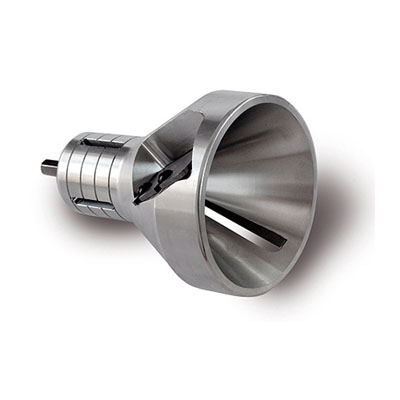
Lumberjack Industrial Series & Pro-Series: CNC machined from solid 6061 aircraft
aluminum.
Pros: Self-centering
design. Dual blades that cut twice as fast as ordinary tenon cutters and
generate less heat for long lasting service. Blades of hardened steel. 1/2"
steel shank is threaded for easy replacement. Patent pending IN-SIGHT
measurement system of slots and radial grooves at 1/2" intervals for
measurement of tenon length during cutting. Lifetime warranty for body and
shank. Blades are covered for 90 days from the date of purchase for breakage
under normal working conditions.
Cons: Higher cost than Commercial Series
or Home Series.

Northwest Manufacturing Tenon Cutter: Cast aluminum.
Pros: High quality construction, long lasting. Adjustable shaft to allow custom sizing of the length of the tenons. Two
high carbon steel blades.
Cons: Higher cost. Larger drill (3/4") required for some sizes.
The details given should help to make a choice when selecting the right tenon cutter for the work being done. If there are any other questions about choosing or using a tenon cutter, give us a call at 1-800-359-6614, or contact us through our website here.
Schroeder Log Home Supply, Inc
www.loghelp.com
1-800-359-6614
Friday, March 11, 2016
Which Packing Cup is best?
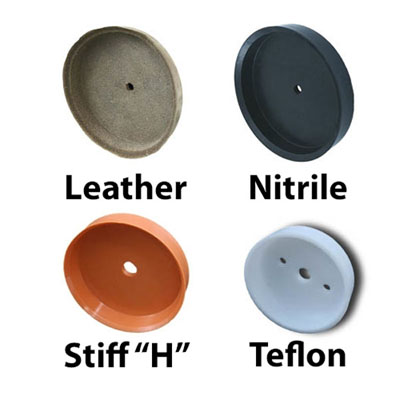
When using an Albion caulk gun for
bulk caulking or chinking application, leather is a one-type-fits-all material
for packing cups and is included with the gun. The packing cups are the
plunger-type component that pulls the sealant into the barrel of the gun and
pushes it back out. In some situations one may choose to replace the leather packing
cups with a different type of material. Here is a general guide for when to use
which cup:
#21-1
Leather: Low friction, tough and durable, excellent
chemical resistance. Soak in motor oil
to maintain. May swell then break down
when used with water based materials.
Oil more frequently or choose another packing cup for acrylics.
#21-7 Impregnated Leather: Similar to soft leather cups but stiffened
with wax to reduce water absorption and blow-by.
#21-16 Nitrile Rubber: Good seal, elastic, moderate friction. Excellent for water-based materials. Preferred by chinkers. Not recommended for use with solvent-based
materials.
Subscribe to:
Posts (Atom)
-
STEP #1: INSPECTION If applying to an older home, check for signs of rot and decay. Remove and replace or repair deteriorated wood. Contact ...
-
 Capture Log Stain by Sashco is a log finish that is extremely effective and attractive semi-transparent stain that is followed by a wea...
 -
Tips For Rotted Logs For restoring log ends like the ones pictured and maintaining the natural gray patina of the logs. 1. First, use a...

