Thursday, February 25, 2016

Factors to Consider When Choosing a Wood Species

Factors to Consider When Choosing a Wood Species
A log home is defined, both aesthetically and functionally, by the type of wood it’s constructed of. Different species of woods have unique properties that make them better suited to certain environmental conditions. Some wood species excel at resisting rot, while others offer superior insulation. Your choice of wood will depend on both personal preference and practical considerations. The good news is there’s no single right answer. The bad news is the list of options can seem downright overwhelming. By identifying what properties are most important to you, however, you can whittle down that list and make your decision easier. Let’s start with the obvious.

Aesthetics


Let’s be honest – one of the reasons people like log homes so much is simply because they look good. Likewise, there’s no shame in choosing a wood species based in part on its appearance. Bear in mind that certain species change in appearance as they age. Wood preservatives can have an effect on the appearance of your log home as well.

R-Value


This is the measure of thermal resistance in building materials. The higher the R-value of a wood species, the better it will insulate your home. If you live in a particularly hot or cold climate, a wood species with a high R-value will help you to regulate the temperature inside your home. Species such as Northern white cedar and white pine have particularly high R-values.

Decay Resistance


Did you know that wood produces natural toxins to combat fungi growth and burrowing insects? These toxins continue to work even after a tree has been felled and hewn into timbers. Some species, such as Western red cedar, have especially high concentrations of these toxins, making them more decay-resistant. If you live in a very wet or heavily-wooded area, a decay-resistant species might be a good option. If you choose a species that’s not known for its decay resistance, however, don’t worry. Wood preservatives can effectively protect your home from fungi and insects as well.

Cost


Finally we come to the ultimate practical consideration. The cost of a given wood species will depend on a number of factors including your location and the speed at which the species grows. Southern yellow pine, for example, tends to be relatively inexpensive because it has a fast growth cycle and is grown in large commercial crops in the Southeast. Wood prices fluctuate just like any other commodity; keep an eye on the market to get the best possible deal on your preferred species.

Monday, February 22, 2016

CobraRod vs Bor8 Rods: What's the Difference?


CobraRod vs Bor8 Rods

What’s the difference between CobraRod and Bor8 Rods?
Bor8 Rods

Borate (disodium octoborate tetrahydrate) is a common solution to preventing or stopping  fungal rot in wood, as well as insect infestation. Borates come in several forms: powder, which is added to water for application; liquid, which is carried in glycol; and concentrated rods, two brands of which are CobraRod and Bor8 Rods.

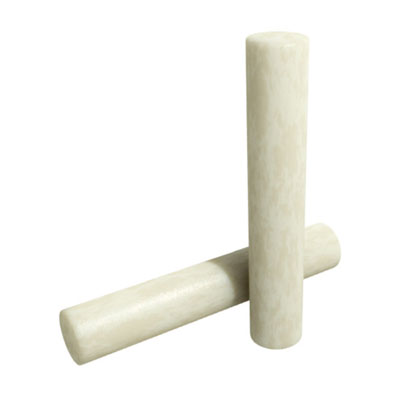
CobraRod and Bor8 Rods (formerly known as Impel Rods) are similar products in form and function. They are both dowels composed of concentrated, compacted borate preservative. They are applied to logs and timbers by drilling a hole to size, inserting the rod, and plugging the hole with caulk, wooden dowels, or wooden or plastic plugs. They both sit dormant in the wood, unless the moisture content of the wood reaches a point where rot becomes a risk. At that time, the rods slowly dissolve into the wood and prevent rot from happening. So, in terms of what they are and how they work, CobraRod vs Bor8 Rods are two similar products (e.g. Pepsi vs Coke, Chevy vs Ford).
How are they different? There are three primary differences between the two brands: preservative, packaging, and point of activation.

Bor8 Rods
Preservative: Both CobraRod and Bor8Rods have an active borate ingredient registered with the EPA as a preservative. CobraRod has an additional copper preservative, which takes care of some fungi unaffected by borate. The copper also gives CobraRod a dark green color, whereas Bor8 Rods remain looking borate-white.

Packaging: Though it is just a matter of marketing and not performance, there are some differences in the sizes and quantity packaging available between the rods. A minor detail, but if a certain size or smaller quantity is needed then one choice may be better than another. For smaller wood applications like window and door frames, Bor8 Rods offer 1/4"x1/2" rods for minimal treatment areas.

Point of Activation: Bor8 Rods begin to dissolve and diffuse into the wood around 25% moisture content. CobraRod activates at around 20% moisture content.

Either rod can be used preventatively or remedially, but it is good insurance to apply them preventatively to lower or exposed logs that may see moisture for constant duration. Logs sitting at deck level, log ends jutting past protection from eaves, and sill prone to collecting rain or snow are all good places to consider inserting preventative borate protection through these rods.
Give us a call at 1-800-359-6614 or visit our website if you have any other questions about using rods for rot prevention.

Tuesday, February 16, 2016

Finally, Someone Builds a Log Car to Drive to Your Log Home

People have been building homes out of logs since the days of the Roman Empire. Building cars out of logs, however, has been uncharted territory until very recently. Leave it to Bryan Reid Sr., log home builder and star of the HGTV Canada show Timber Kings, to build the world’s fastest (and first, as far as we know) log dragster.

Reid had imagined building a log car for a while, but it wasn’t until he enlisted the help of a few mechanically-inclined friends that he was able to make his dream a reality. After drafting up some plans, Reid scoured his warehouse to find the perfect specimen for his vehicle. He found it in a 240 year old cedar log with some distinct features that reminded him of the fins on a racecar. Using chainsaws and chisels, Reid and his small team shaped the log into the body of their vehicle. They called it the Cedar Rocket.

The rocket rides on the suspension of a Mazda RX-7 and it’s powered by an electric motor and 500 pounds of lithium-ion batteries. Behind the cockpit, two cherry red turbines make the vehicle look like it’s ready to take flight. In fact, just like the spoiler on your old Dodge Neon, they’re just there for show.

Last month, the Cherry Rocket earned itself a spot in the Guinness Book of World Records when it topped out at 55 mph on a drag strip in Arizona. That might not seem like much, but in light of the fact that the vehicle is a 2,200 pound piece of wood being propelled down a track by a glorified golf cart motor, that’s not half bad.

Reid plans to sell the Cedar Rocket for $1 million and donate the proceeds to charity. So, if you’re in the market for a log car that goes like crazy in a straight line and you happen to have a million dollars burning a hole in your pocket, now’s your chance!      

Wednesday, February 3, 2016

21 Log Cabin Builders Share Their #1 Tip For Building Log Homes

 We were happy to contribute to this post on tips for building log homes:

21 Log Cabin Builders Share Their #1 Tip For Building Log Homes

We are a product supplier and don't build log homes, but we do talk to many contractors who build them, applicators who maintain them, and homeowners who have one!

Give us a call for more pre-building considerations. Good design can make your life a lot easier down the road. 1-800-359-6614 or info@loghelp.com

Tuesday, February 2, 2016

What's Up With Woodpeckers?

www.artesianmind.com

I've been getting a lot of calls recently from log home owners having woodpecker problems. I don't know if it's mere coincidence they are all calling about  it now or if there is something in their biological cycle making them more active this year. Either way, woodpeckers are not an issue unique to log homes. My in-laws have a painted wood-sided home and one over-ambitious woodpecker managed to make a hole all the way through the interior drywall. Yikes. What a nosy and noisy fella. Personally, I love watching birds- especially the pileated woodpeckers. But it can be frustrating when they come and start perforating your home.

So what is one to do when Woody comes whacking on your wall and puts a hole in your log? Unfortunately, there aren't any miracle solutions of which I'm aware, but there are a few things you can try. First, let's look at why woodpeckers bang their heads against wood in the first place. Without asking them directly, one can assume a woodpecker is soliciting your home for one of three reasons: looking for food, looking for shelter, or sending out social cues. 

Feeding
A common motivation for woodpeckers pecking on trees is to reach insects, larvae, and other food. If woodpeckers are pecking at your home, it may be a sign that they see it as an open buffet. Maybe there is an issue with insects in the wood. In that case, treatment with a borate preservative like ArmorGuard, PeneTreat, or ShellGuard RTU, or a contact insecticide like Bug Juice or Viper may be the way to go.

Nesting
Woodpeckers will also go to work on an old tree to excavate a nesting cavity. This is when the most damage is done, in an effort to hollow out a home, in which case they could destroy yours in the process. Fortunately, this typically doesn't seem to be the motivation for the birds when they are pounding on someone's house-- at least, not by my experience.

Mating and/or Territorial
Sometimes woodpeckers are just making noise to let others know they're around. They drum on trees, homes, and even telephone poles to send a message-- either an invitation or a warning.

Remedies
I am still searching for that miracle cure for woodpeckers to keep them off one's house-- until then there are a few things that can be tried. As mentioned earlier, if the woodpeckers are going after food, then eradication of wood-boring insects from the home might help deter the birds. Also hanging suet and giving them a different food source could help.
If the woodpeckers aren't tapping your home for food, then they might be pounding for mating or territorial reasons. This can make it difficult to deter them. There are a number of things that have been tried:

-Repelling them with chemical smells such as 'moth balls.'

-Scaring them visually with owl statues, spinning/flashing objects like foil, pie plates, pinwheels and other objects; or scaring them with sound such as banging pots or clapping hands when they are seen. Unfortunately, visual objects to scare them can have aesthetic drawbacks on your home, and scaring with sound requires you to catch them in the act to shoo them off.

-Blocking them with bird netting under the eaves or wire mesh directly on the surface is another option to keep them off the home. Unfortunately, this can also have aesthetic drawbacks.

We are still searching for that miracle cure that will let you enjoy the birds without having them destroy your home. The good news is... the damage is fairly easy to repair.

Repairing the Damage
Whether a solution is found to keep the woodpeckers off your home or not, if they were there it's likely there may be a bit of damage to repair. Fortunately, this is the easy part. Wood replacement putty epoxies like WoodEpox or E-Wood can be mixed and packed into the holes for a quick repair. Adding some pigment to the two-part epoxies while they are still malleable can help to blend to the surrounding wood so that the patch is undetectable from a distance. In the case of painted wood homes, the putty can be painted over for a completely seamless patch.

If you have any other questions about woodpeckers or other repairs to make to your home, give us a call at 1-800-359-6614 or email at info@loghelp.com Or if by chance you have found that miracle cure to repel woodpeckers from your logs, please let me know so we can help other homeowners!

-Schroeder Log Home Supply, Inc
'Your Log Home Hardware Store'

Tuesday, December 15, 2015

Is a Geothermal Heat Pump Right for Your Log Home?

Because they’re extremely energy efficient and environmentally friendly, geothermal heat pumps have become increasingly popular in the last couple of decades. Many log home owners find that geothermal heat pumps are a great way to keep energy bills low while keeping their homes at a comfortable temperature all year round. Before you commit to a geothermal installation, however, some research is in order. Today we’ll weigh the pros and cons of geothermal heat.

In Favor of Geothermal Heat


As we’ve already mentioned, geothermal heat pumps are remarkably energy efficient. Rather than relying on the burning of fossil fuels, geothermal heat systems work in much the same way that a refrigerator does, using a series of liquid-filled coils to draw underground heat up into your home. Once the heated liquid rises above ground level, it’s distributed throughout your home with a blower and ductwork. Rather than creating a new heat source, a geothermal system simply moves nearby heat from the inside of the earth to your home. Geothermal systems are also quiet and low maintenance because there are very few moving parts involved.

Drawbacks of Geothermal Heat


The first thing that usually deters homeowners from getting geothermal heat is the installation cost. This initial investment may cost anywhere from $10,000 to $30,000 dollars. It will increase your home’s resale value and significantly lower your energy bills, but unless you’re planning on staying in your home for a number of years in the future the cost of installation can be a bit hard to swallow. The installation also requires a considerable amount of digging and drilling in your yard. The overall difficulty of installation will depend on your locale and soil conditions.

Want to learn more about geothermal heating? Check out this helpful guide from the U.S. Department of Energy.

Tuesday, December 8, 2015

Winterizing Your Log Home

Here in Minnesota, the nights are getting colder and the days are getting shorter. Winter won’t officially begin for a few weeks yet, but already the snowy season is beginning to take hold. Is your log home ready to weather the elements? Log homes might be famously sturdy and rugged, but it’s always a good idea to perform a thorough inspection and treat them to a little TLC to prepare for winter. Today, we’ll look at a few steps you can take to winterize your home.

Check the Exterior


This is perhaps the most important step in the winterizing process. Take a walk around your home and keep a close eye out for gaps that need to be sealed with fresh bead of caulk. Inspect weather stripping for damage as well. Wash your home’s exterior to remove mildew, grit and grime and reveal any areas where the stain is peeling. Apply new stain if necessary, but take to mind the temperature. Stain should typically not be applied in temperatures below 40 degrees Fahrenheit.

Don’t Forget the Foundation


Check the foundation for cracks and gaps, and seal them if necessary. Clear any organic debris such as leaves and sticks away from the foundation. Rotting vegetation can be a haven for burrowing insects and rodents. Likewise, you don’t want it anywhere near your home’s foundation. Keep firewood elevated and stored away from your home, too.

Clear Gutters and Downspouts


To prevent mold and mildew growth, it’s especially important to keep water runoff away from your log home’s exterior. This is where your gutters and downspouts come into play. Make sure they’re clean and free of debris, and consider installing leaf guards on gutters to keep them from clogging during the winter.

Protect your Pipes


In sub-zero temperatures, frozen pipes are an ever-present threat to your home. Insulate any exposed pipes and make sure that you know where your water main shut-off valve is in case of an emergency. It’s also a good idea to keep a space heater on hand in case of a pipe freeze. If you go away for the winter, be sure to set your heat to at least 55 degrees to keep pipes from freezing.

Remember: if you have a fireplace in your log home, it’s important to have it cleaned prior to using it this winter as well. Want to learn more about cleaning and maintaining your log home? Stay tuned for more updates from Schroeder Log Home Supply!

Log Help Posts are Moving

 This site will no longer be updated, but please visit www.loghelp.com and especially the FAQs tab for regularly updated content and relevan...