Friday, August 8, 2014

Cleaning Your Woodwork


One of the most alluring quality of log cabin homes is the beautiful exposed woodwork. Before the summer months come to a close, make it a goal to deep clean your home's woodwork. Here are some tips for keeping your home's wood in the best shape:

Standard Wood Cleaners

When cleaning the interior of your log cabin home, you can simply scrub the walls with a sponge or cloth using Murphy’s Oil Soap and/or a citrus-based cleanser. You can also use a mixture of water and color-safe bleach (NOT regular bleach) to scrub out dust and stains. 

Polish

You’re welcome to use a coat of wood polish a day or two later to restore the wood’s shine if you so choose. Keep in mind that you should try scrubbing in an inconspicuous place first, to test and see how your logs react to various products. If you bought the home from a previous owner, ask them for tips on what they used to clean and maintain the wood. 


For Strong Stains


If you need a stronger stain remover, you can mix a cup of a powdered detergent known as “TSP” (tri-sodium phosphate) with one quart of plain liquid bleach and three quarts of warm water. Use a hand-pump garden sprayer to apply this mixture to the wood, and then, after five minutes, rinse it off. Wear rubber gloves and a mask over your nose and mouth since you don’t want to get this mixture on your hands or the fumes in your lungs. In addition, make sure the area is well-ventilated.

Sanding


A last resort is to sand the wood, which is hard work. Sanding, however, will help restore the logs to their original color.


Exterior Cleaning


As for the log cabin home’s exterior, you can use a power washer to remove dirt and grime. Two guiding principles for power washing are: don’t stay on one spot too long and don’t use too much pressure. Remember, it’s good to test a little spot to determine what works best before you go and tackle an entire wall or house.

Thursday, August 7, 2014

Love Your Cabin


Hundreds of years ago, log cabins were the most efficient option for building homes. When they were built, the trees were hand cut and molded into the correct shape for building. The owner and his family would spend years selecting the wood and carving it into shape – hundreds of times over, until they had finally achieved a full structure. These homesteads were where families spent generations. They were built to last. 

As technology developed, we have been able to draw inspiration from these earlier builders and improve on the process. We look at their hard work and we really value what it took to accomplish such great things by hand. Using them as an inspiration, we’ve made log homes more efficient. They are able to be built quicker, last longer, and instead of moss and dirt – we are able to properly insulate them.

No doubt that log homes have come a long way over the years. They allow us to revel in rustic culture while still keeping in touch with modern convenience. Today, log homes are comfortable and nostalgic. 

Here are a list of a few improvements we’ve made to the modern log cabin:

Caulking

No doubt an important process in building any home today, caulking ensure that what should stay out, stays out – and what should stay in, stays on. By using an eco-friendly caulk, you are ensuring that the surrounding environment also stays intact. Need to figure out how much caulking you’ll need for your log home? We have a calculator.

Chinking

This technique is used to fill gaps between logs. It’s sort of like a synthetic mortar and it’s vital to the life of any log home.  Keeping the joints sealed will ensure better insulation, and a longer lasting home. For more information, and even another handy calculator – click here.

Pest Control

One of the drawbacks of rustic living is that it forces you to cooperate with nature in ways that are uncomfortable. Bugs are a normal part of the outdoors, but it’s nice to be able to escape from them in our homes. With a variety of pest control options, your log home can be a private oasis away from even the bugs.

Insulation

Traditionally, winters were long months of suffering through terrible freezing conditions. Things have changed a bit, and believe it or not, we aren’t suffering as much as our ancestors were 200 years ago. We’ve been able to create innovative ways to insulate log cabins to make the winters and summers a little more bearable.

 Investing in these various improvements or implementing them during construction can vastly improve your log cabin experience. Give us a call if you have any questions about your log home. We’ll do our best to help!

Wednesday, February 20, 2013

Build Your Dream

by r.m. prunty '95
We've had this original painting hanging in our office for nearly 20 years. It's a fun reminder to build your dreams! Log home owners range from a guy cutting trees on his hunting property and building a small cabin, all the way up to the large log castles you see on the Travel Channel. Whether a hunting shack in the woods, a standard log home for a family, or a log castle that a billionaire visits two week a year, every log cabin and every log home begins with a dream!

Thursday, February 14, 2013

Thursday, September 20, 2012

Thoughts on a Log Sauna

An historic sauna in Sebeka, MN.
What's in a log sauna? Much of the history of building with logs traces back to Northern Europe, and especially to the nation of Finland. Finnish craftsmen brought their art to the New World and we still see many of their structures scattered throughout the northern lake states. Hand-in-hand with log cabins and homes, the Finns brought with them their saunas. The idea of a sauna isn't completely unique to Finland; many other Scandinavian and other Europe nations have similar traditions.

Many non-European cultures have similar baths, such as the Native American sweat lodges. Nonetheless, saunas seem to be a particular highlight of the Finnish culture, and as a result the regions of their settlement are speckled with saunas old and new. Rumor has it the sauna was the most important structure to Finnish immigrants, and therefore the first building to be erected when settling on some new acreage. Here in Northern Minnesota, the author is constantly encountering people who have discovered, purchased, or inherited century old log structures and many appear to be built as saunas.

From Native American sweat lodges to Turkish baths to Scandinavian saunas, no matter what cultural tradition one heralds we can all appreciate a great a log sauna and the rich history that sizzles from its stones. A log sauna is an affordable structure that is a great option for those who aren't in a position for a full log home; the smell of cedar and comfort of wood are all synthesized to make a log sauna the perfect place for relaxation for anyone.

Wednesday, August 8, 2012

Preserving Wood with Copper

Logs, cedar siding, and other wood structures are made of naturally occurring products, which make them attractive, appealing, and a 'green' renewable building choice. Unfortunately because it is naturally occurring, wood is also susceptible to the natural process of decay by insects and fungi. Forest products lab research has identified certain chemical compounds that help to fight the natural breakdown of wood. Interesting enough, Copper is a common denominator. Copper, in several different forms, preserves wood!

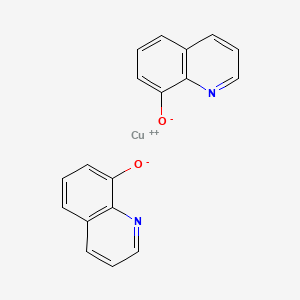
Copper 8 Quinolate
In order to control fungi and preserve wood, an effective antimicrobial pesticide used to protect the wood is Copper 8 Quinolate. Some log home wood stains like WOODguard and Outlast Q8 Log Oil are also registered with the EPA as preservatives because they contain copper 8 quinolate in order to protect the wood. As copper oxidizes and turns green, so the copper 8 quinolate can also make these log oils appear green. Fortunately, the green color will subside as the oil cures on the wood.
http://www.epa.gov/oppsrrd1/reregistration/copper-quinolate/

Copper Hydroxide
Certain compounds of Borate compounds like Armor Guard and PeneTreat are another preservative used to protect wood from insects and fungal decay, but certain species of fungus are not affected by Borates. For this reason, the Boron and Copper compounds are used together for more effective preservation. One example is a concentrated dowel-like preservative called CobraRods. CobraRods are a wood preservative, fungicide and insecticide made entirely of a unique Boron and Copper Hydroxide complex. The addition of Copper Hydroxide provides extended protection from fungus species not affected by borates. They are inserted into wood as a solid rod and remain dormant until the wood comes to a moisture content of 20% or more as rot becomes a threat. When the wood is moist, the preservative slowly diffuses into the wood and kills the rot-causing fungi.

Chromated Copper Arsenate (CCA) & Alkaline Copper Quartenary (ACQ)
 Pressure-treated wood has become a widely used product for decks, boardwalks, landscaping timbers, and other outdoor wooden structures. The green appearance in some formulas comes from the Copper in Chromated Copper Arsenate, which is pressure-treated into the wood for long-lasting protection. Alkaline Copper Quartenary (ACQ) is another formula used to pressure treat wood, and it comes in four variations for different species. Though CCA and ACQ have chemical differences, they share the aspects of preserving wood and containing Copper.
http://www.epa.gov/oppad001/reregistration/cca/
http://www.epa.gov/oppad001/reregistration/cca/acq.htm

Copper Post Caps

 One other way that Copper is used to protect wood is not by any chemical means, but rather through functional decoration. Railing and deck posts often have exposed end grain, which are susceptible to water absorption, which in turn creates moist conditions for rot to occur. It has become popular to protect the tops of those posts while adding a decorative flare with copper post caps. In a similar fashion, Copper flashing has been using in lateral application to protect vulnerable areas of wood while adding a splash of shine and color for an aesthetic accent.

Wednesday, July 18, 2012

Wood-Dwelling Wasps

wood dwelling mason wasp
Mason Wasp sized by a dime
Insects of various species like to inhabit or ingest wood and so in construction, preservatives are often necessary to keep them at bay. Logs have their usual, commonly-known arthropod offenders: carpenter ants, carpenter bees, powderpost beetles, and termites. Every now and then, however, we have to dig out the entomology books to identify a new culprit. Such is the case this summer, when a dozen or so individuals reported holes in their logs being occupied by a very small hornet-looking insect, as shown in the submitted photo.

After flipping through some books and surfing images on the Internet, we determined the insect was a mason wasp, also known as a potter wasp. For the scientists in the room, this collection of insects is classified in the subfamily of Vespidae with other wasps and hornets, and it is sometimes recognized more specifically in a separate family as Eumenidae.

Mason wasps are a predatory insect that feed on the larva of other insects and build nest with mud but at times will dwell in holes of wood for nesting purposes. They also build mud walls to divide and seal their chambers. Though they may be seen flying in and out of holes in the logs of your home, chances are they didn't make the holes. They are probably using preexisting holes for their nests, and so other than a nuisance they are of no particular harm. They can even be beneficial as they prey on tent caterpillars/army worms, and other problematic larva.

If they are found to be a pest and extermination is the goal, insecticides can be put in the holes, which can later be disguised by a log home caulk. Because of the mud barriers they put up to protect larva, it is wise to poke a wire into the hole before applying an insecticide to break their mason walls.

Photo credit: Julie Johnsen
More information: http://en.wikipedia.org/wiki/Potter_wasp

Log Help Posts are Moving

 This site will no longer be updated, but please visit www.loghelp.com and especially the FAQs tab for regularly updated content and relevan...